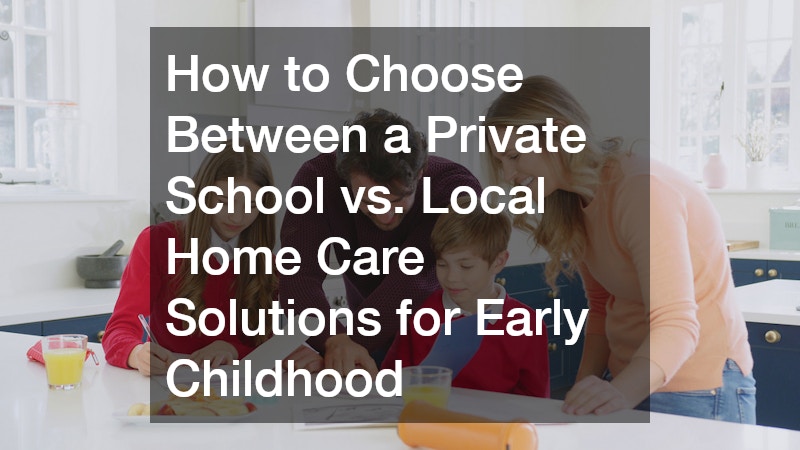
Parenting brings an endless stream of pivotal decisions, but few weigh as heavily on families as determining the best path for early childhood development during these critical formative years. During the foundational period from infancy through age six, a child’s brain undergoes remarkably rapid neurological growth, absorbing environmental cues, forming deep emotional bonds, and building core cognitive and social skills. Parents often find themselves standing at a critical crossroads, torn between structured early learning facilities and personalized, domestic care environments. Each pathway presents distinct advantages, cultural methodologies, and social dynamics. Understanding the core distinctions between structured external, private school settings and intimate domestic arrangements requires careful reflection on your child’s temperament, your household schedule, and your long-term developmental goals.
Choosing the right setting goes beyond mere scheduling convenience. It impacts how young children experience social boundaries, develop emotional resilience, build language proficiency, and interact with the broader world. Structured institutions often provide specialized educational philosophies, vibrant peer groups, and rigorous developmental tracking. Conversely, home-focused care emphasizes tailored individual attention, familiar routines, and a nurturing environment tailored specifically to your family’s daily rhythms. Navigating these options can feel overwhelming, particularly when balancing financial commitments with educational aspirations and emotional comfort. By analyzing key factors such as socialization goals, flexibility, specialized learning methods, and financial commitments, families can establish a clear framework for decision-making.
Furthermore, it’s helpful to recognize that early childhood choices aren’t always binary or permanent. Many families successfully transition between models or combine elements of both as their child’s needs evolve over time. What works wonderfully for a cautious toddler may look very different when that same child reaches age four and craves a broader community of peers. Evaluating these options requires a clear look at your family’s daily stress points, your working hours, and the kind of learning environment in which your child seems most relaxed and engaged. Ultimately, the best choice aligns seamlessly with your family’s unique lifestyle, values, and child’s personality, creating a strong foundation for lifelong learning, confidence, and emotional security.
1. Mapping the Landscape of Early Development
Deciding on early nurturing arrangements requires a holistic view of your child’s personality and daily rhythms. Structured environments provide dynamic group settings where toddlers interact with peers of similar ages. This setting introduces children to sharing, group cooperation, and structured daily schedules early on. A traditional daycare can offer vibrant social exposure, allowing children to build essential emotional control alongside their peers.
- Exposure to diverse peer groups and collaborative play.
- Structured daily schedules that encourage consistent sleep and meal routines.
- Opportunities to learn turn-taking and conflict resolution early.
For active toddlers who thrive on group interaction, structured facilities create an energetic atmosphere that supports rapid social integration and foundational communication skills. Learning to operate within group dynamics helps children build resilience, practice patience, and observe positive behavioral patterns modeled by both teachers and fellow classmates on a daily basis.
2. Tailoring Care Within the Nurturing Comfort of Home

For many families, keeping children in their native environment during early developmental stages offers unmatched peace of mind. Personal care arrangements allow caregivers to adapt completely to your child’s natural nap schedules, dietary preferences, and emotional needs. Utilizing professional home care services ensures that your young child receives one-on-one attention without the chaotic sensory overload sometimes found in large group facilities.
- Personalized attention tailored to your child’s specific developmental speed.
- Reduced exposure to common childhood seasonal illnesses.
- Direct alignment with your preferred household rules and parenting philosophies.
This intimate approach builds strong, secure attachment figures, giving sensitive or younger children a quiet, predictable space to build confidence before transitioning into larger classroom environments later in life. Having a trusted provider in your own space also allows for seamless communication regarding daily milestones, emotional shifts, and evolving routines.
3. Evaluating Structured Pedagogies and Early Academics
When exploring structured institutional pathways, many parents seek specialized educational frameworks that promote self-directed activity and hands-on learning. Settings utilizing the Montessori method encourage independent exploration, spatial reasoning, and practical life skills within prepared classroom environments. Opting for a certified Montessori daycare helps children cultivate concentration, self-discipline, and natural curiosity through tactile materials.
- Mixed-age group dynamics that foster peer mentorship and social empathy.
- Specialized sensory materials designed to develop fine motor control.
- Encouragement of self-directed choices within clear, structured boundaries.
Children who excel in environments that honor independent problem-solving often flourish under these specialized, student-centered methodologies during their early formative years. These early academic and life skills lay a solid groundwork for future classroom experiences, encouraging children to view learning as a joyful, self-motivated exploration.
4. Navigating Flexible Support for Complex Family Schedules
Modern family life rarely follows a uniform schedule, making flexibility a primary consideration when evaluating care models. Parents with non-standard work hours or frequent business travel often struggle to meet the rigid drop-off and pick-up requirements of traditional institutions. Securing reliable in home care provides absolute logistical adaptability, allowing caregivers to manage morning routines, evening shifts, or sudden schedule shifts smoothly.
- Customized care hours tailored directly to non-traditional parental work schedules.
- Reduced transportation stress with care provided directly inside the residence.
- Seamless continuation of child routines even during unexpected parental overtime.
This flexibility minimizes household stress, ensuring your child receives steady, familiar care regardless of external professional demands placed on the parents. It removes the daily morning rush, allowing family days to start calmly and preserving quality time for parents and children when working hours are irregular.
5. Fostering Cognitive Growth Through Immersive Language Learning
Language acquisition occurs with remarkable speed during early childhood, making this period ideal for introducing foreign languages. Specialized early childhood institutions often embed immersive linguistic programs into their core curriculum, enabling young learners to pick up multiple languages naturally through daily play and instructions. Families seeking global perspectives might consider multi-language schools in Singapore to expose children to rich linguistic diversity early on.
- Natural language acquisition through play, storytelling, and songs.
- Enhanced cognitive flexibility and improved problem-solving capabilities.
- Broadened cultural awareness and global perspective from an early age.
Early exposure to multiple languages enriches cognitive development, strengthening memory and communication skills while giving young learners a valuable head start in an interconnected world. Children exposed to diverse languages develop heightened phonetic sensitivity and a lifelong curiosity about different cultures and communities worldwide.
6. Assessing Physical Spaces and Creative Exploration Areas
The physical environment where a child spends their day plays a vital role in shaping their curiosity, physical health, and motor skill development. Facilities designed specifically for young learners offer dedicated physical infrastructure, including soft play areas, outdoor playgrounds, and specialized creative studios tailored for messy play and artistic expression.
- Custom-designed safety features and age-appropriate physical structures.
- Dedicated areas for gross motor play, crawling, climbing, and running.
- Access to specialized art supplies, musical instruments, and sensory tables.
A thoughtfully designed physical space invites safe physical risk-taking, encouraging children to push their physical boundaries while discovering creative outlets in secure, supervised surroundings. Large, purpose-built environments give children ample room to burn energy outdoors and engage in collaborative physical games that are hard to replicate inside a home setting.
7. Balancing Specialized Socialization with Personalized Guidance
As children transition from infancy into active toddlerhood, their developmental needs shift dramatically toward peer interaction and motor exercise. Structured group environments designed specifically as toddler programs provide age-focused curricula that balance physical play, emerging language skills, and foundational social boundaries.
- Group activities designed to enhance gross and fine motor coordination.
- Early introduction to basic academic concepts like colors, shapes, and numbers.
- Guided socialization that teaches children how to navigate group dynamics.
These specialized group sessions help toddlers channel their boundless energy into productive learning experiences, easing the emotional transition toward formal kindergarten environments. Participating in daily group rituals, such as circle time and shared clean-up routines, instills a sense of shared responsibility and community participation from an early age.
8. Prioritizing Customized Routines and Individual Health Concerns
Children with specific dietary restrictions, medical needs, or sensory sensitivities often require individualized care plans that group facilities struggle to accommodate fully. In these cases, opting for private home care allows families to maintain complete control over the child’s daily environment, nutrition, and medical protocols without compromising safety.
- Direct oversight of dietary preparation for children with severe allergies.
- Tailored environmental controls for children with sensory processing sensitivities.
- Undivided attention from caregivers focused solely on your child’s well-being.
This local home care focus gives parents total oversight, ensuring that health requirements and personal developmental goals are met with absolute precision and dedicated care. Having direct influence over every aspect of the day offers profound peace of mind for families managing complex health conditions or unique developmental journeys.
9. Integrating Artistic Nurturing Within Domestic Environments
Nurturing creativity at home requires intentional space management and freedom for unstructured exploration. Transforming a dedicated corner of your home into an inspiring artist space allows young children to engage freely with visual mediums, tactile craft materials, and open-ended play without worrying about mess or space constraints.
- Open access to diverse creative mediums like paints, clay, and paper.
- Freedom to engage in open-ended creative expression without tight time limits.
- Encouragement of self-confidence through personal artistic discovery.
Providing an inspiring domestic environment encourages children to express emotions, refine fine motor skills, and develop independent artistic curiosity within the safe boundaries of home. Creating dedicated spaces for imaginative creation reinforces the idea that self-expression is valued, worthy of space, and an integral part of everyday domestic life.
10. Evaluating the Financial and Long-Term Value Commitments

Every early childhood care path carries distinct financial implications that must be weighed against long-term family goals. Structured institutions generally charge set tuition fees, whereas personalized domestic care involves hourly rates, employment considerations, or agency fees. Comparing these financial models alongside the qualitative benefits ensures your choice remains sustainable over time.
- Transparent monthly tuition rates versus variable hourly caregiver costs.
- Additional costs such as commuting expenses, supplies, or employment taxes.
- Value measured through child happiness, parental convenience, and developmental progress.
Analyzing financial factors alongside your family’s overall lifestyle ensures a balanced decision that supports your child’s growth without creating unnecessary household stress. A clear budget allows you to plan comfortably for future educational steps while maintaining a stable, enriching environment for your child in the present.
Selecting between structured institutional settings and personalized domestic care is a deeply personal journey without a single universal answer. Every child possesses a distinct personality, temperament, and developmental timeline that responds differently to social settings and educational structures. Some children thrive in the high-energy, socially dynamic atmosphere of structured group environments, building confidence through peer interaction and structured group activities. Others bloom in the calm, predictable surroundings of domestic care, where one-on-one attention supports their unique emotional and physical needs at an individualized pace. Recognizing your child’s distinct cues will guide you toward an environment where they feel safe, understood, and motivated to explore.
As you weigh your options, consider your family’s daily rhythms, work commitments, and financial priorities alongside your child’s needs. Remember that your decision isn’t set in stone; early childhood care can evolve as your child grows, moves through different developmental stages, and develops new interests. What works during early infancy may naturally adapt into a hybrid arrangement or a full transition into classroom learning as your child seeks out larger social circles. Visiting local facilities, interviewing professional caregivers, observing daily operations, and asking detailed questions will provide valuable clarity during this decision-making process.
Furthermore, trust your instincts as a parent throughout this transition. While data, reviews, and educational philosophies are important tools, your intuitive understanding of your child’s emotional well-being is the ultimate guide. Pay attention to how your child reacts during site visits or trial sessions, and give your family permission to adjust course if a particular setup isn’t delivering the balance and peace of mind you anticipated.
Ultimately, both structured learning environments and personalized domestic care offer wonderful pathways to foster cognitive development, emotional security, and social growth. The key is choosing the solution that aligns best with your parenting values and creates a supportive, loving foundation where your child can flourish. By focusing on your child’s happiness, health, and developmental security, you can make a decision that supports your entire family’s well-being and sets a bright stage for a lifelong journey of learning and discovery.