A great neighborhood block party does not happen by accident. It takes early planning, a clear sense of space, and a handful of logistical decisions that keep the day running smoothly for everyone involved. Whether you are gathering twenty households or two hundred people, the difference between a chaotic afternoon and a memorable community event usually comes down to preparation. This guide walks through the practical steps of mapping out your space, arranging setup, and handling the details that make a block party actually work.
Choosing the Right Location for Your Gathering
The first decision in planning a block party is deciding where it will actually take place, since not every street or common area is suited to hosting a crowd. Consider whether you will close off a street, use a shared park, or gather in someone’s larger yard, and weigh the tradeoffs of each option in terms of space, shade, and access to bathrooms. If your neighborhood has a homeowners association, an estate manager overseeing a private community, or a designated common area coordinator, reach out early to understand what spaces are available and what approvals you need. Getting this piece right early prevents last-minute scrambling once invitations have already gone out.
Think also about accessibility for families with strollers, older neighbors who may need seating close to the action, and anyone with mobility challenges. A flat, shaded location with minimal traffic exposure is almost always preferable to a busier or sloped one, even if it means a slightly smaller footprint. Walk the space in person before finalizing plans so you can picture where tables, games, and food will realistically fit.
Getting Permits and Permission Sorted Early
Many cities require a street closure permit or a special event permit for block parties, especially if you plan to block off a public road or serve food to a large group. These applications often need to be submitted four to six weeks in advance, so this is not a task to leave until the final week. Check your city or county website for the specific department that handles neighborhood events, since requirements vary widely between small towns and larger municipalities.
If your event will take place within a private community, your property manager may be the one who handles permissions rather than the city itself. This is especially true in gated neighborhoods, condo associations, or planned developments where shared spaces are managed privately rather than by a municipal authority. A quick conversation with whoever oversees the property can clarify insurance requirements, noise restrictions, and any deposit needed to reserve a common area.
Mapping Out Tables Seating and Traffic Flow

Once you know your space, the next step is sketching a rough layout so you know where food, seating, games, and activities will go. Grab a piece of paper or use a free tool like Canva or Google Drawings, and mark fixed features first — fire hydrants, storm drains, driveways, and mailboxes — since these can’t move and everything else has to work around them. A simple hand-drawn map shared with volunteers ahead of time prevents confusion on the day of the event and helps avoid bottlenecks around popular spots like the food table or dessert station. Aim for at least 6 to 8 feet of clear pathway through main walking routes, and widen that to 10 feet near entrances and the food line, where clusters of people tend to stall. Leave wide pathways for strollers, wheelchairs, and general foot traffic, particularly near entry points where people will be arriving and leaving throughout the day. Think about flow the way event planners do: separate “loud zones” like games and music from “quiet zones” like seating for elderly guests or a space for small children to nap. Placing the dessert table away from the main food line, for instance, can split up crowds that would otherwise bottleneck in one area. It’s also worth designating a specific spot for coolers, folding chairs, and personal items, so driveways and walkways don’t slowly fill up with clutter as the day goes on.
- Place food and drink tables away from the main walking path, ideally along fences or driveways, to reduce congestion and keep serving lines from blocking foot traffic
- Keep the kids activity zone visible from adult seating areas so parents can supervise without hovering
- Position trash and recycling bins at multiple spots (every 20-30 feet) rather than just one, and label them clearly to keep sorting easy
- Reserve shaded areas, under trees, canopies, or pop-up tents, for elderly guests and small children, and add extra seating there
- Leave a clear 10-12 foot lane for emergency vehicle access if you’re on a closed street, and mark it with cones or tape so no one sets up chairs or tables in it
- Group seating in clusters of 4-6 tables rather than long rows to encourage conversation and make cleanup easier
- Sketch a simple layout beforehand and walk the space to confirm sightlines, table spacing, and pathway width before the party day
Renting Tables, Chairs, and Shade Structures
Most neighborhoods do not have enough folding tables and chairs sitting in garages to seat a large crowd, so renting equipment is usually part of the plan. Party rental companies typically offer packages that include tables, chairs, canopy tents, and sometimes linens, which can simplify the ordering process considerably. Book these at least two to three weeks ahead during peak spring and summer months, since rental companies get busy fast once the weather turns warm.
If your neighborhood hosts these events regularly, it may be worth exploring semi-permanent options for common areas, such as custom sheds built to store folding tables, canopy poles, and outdoor games between events. A dedicated storage structure means volunteers are not stuck asking around for who has the folding chairs from last year, and it keeps shared equipment protected from weather damage. This is a bigger investment but one that pays off for communities that host multiple gatherings throughout the year.
Planning Food, Drinks, and Shared Meals
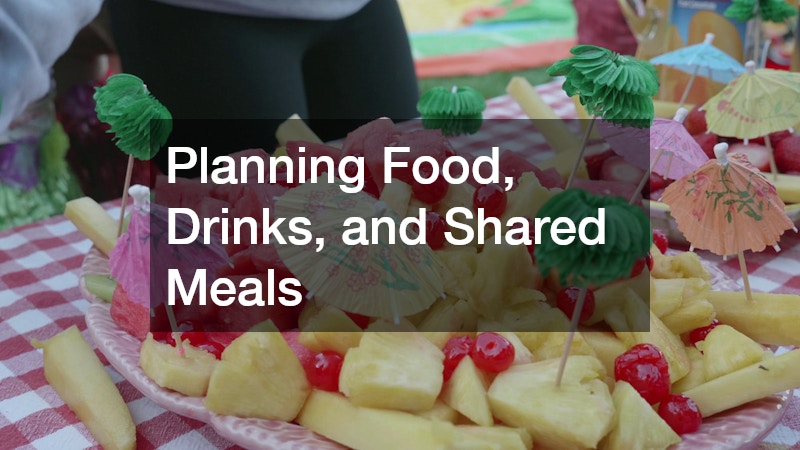
Food is often the centerpiece of a block party, and the format you choose shapes almost everything else about the event. A potluck style gathering keeps costs low and lets neighbors show off favorite dishes, while a centrally organized menu with grilled food gives more consistency and control over quantities. A hybrid approach also works well: organizers handle the main course, like burgers or hot dogs, while families sign up to bring sides, salads, or desserts based on a shared sign-up sheet. If you go the potluck route, assign categories rather than leaving it open-ended. Ask a handful of households to bring appetizers, others to bring sides, and a few more to handle desserts, so you don’t end up with ten bags of chips and no vegetables. A simple online spreadsheet or a group chat poll can help coordinate this without much effort. Drinks deserve their own plan, especially in warm weather. Set up a beverage station with water, lemonade, and canned drinks kept cold in large coolers or galvanized tubs filled with ice, and consider a separate table for guests bringing alcohol so it stays clearly optional and age-appropriate. Whatever format you choose, make sure there are clear labels for common allergens like nuts, dairy, and gluten so guests can make informed choices. Small index cards or printed labels listing ingredients work well, and it helps to designate one area of the table for dishes that are free of the most common allergens. It’s also worth having a few disposable gloves and serving utensils on hand so guests with dietary restrictions can serve themselves without cross-contamination.
- Assign specific dish categories, like sides, desserts, mains, and drinks, to avoid duplicate contributions and gaps in the spread
- Use a shared sign-up sheet or group chat so neighbors can see what’s already covered
- Set up a designated area for warm dishes separate from cold items, using slow cookers or chafing dishes to keep hot food above 140°F
- Keep cold items like salads and dips on ice or in coolers to stay below 40°F, especially in summer heat
- Provide ice and coolers for drinks so nothing sits out too long in the sun
- Consider a separate cooler or cart for alcohol, clearly labeled, if the event includes adults-only beverages
- Ask about food handling basics if minors will be serving or plating food, like using utensils instead of hands and washing up beforehand
- Have a plan for labeling common allergens, such as nuts, dairy, or gluten, so guests can make informed choices
- Keep a rough headcount so you can estimate quantities accurately, planning for about half a pound of food per adult
- Set out extra napkins, serving spoons, and trash bags near the food table to keep things tidy as the day goes on
Setting Up Activities for Children and Teens
A successful block party usually needs a plan for keeping younger guests entertained, since bored kids can quickly turn restless and pull adult attention away from socializing. Simple options like sidewalk chalk stations, a bounce house, or a designated craft table tend to work well because they require little supervision once set up. If your neighborhood has connections through local afterschool programs, that network can be a great resource for finding reliable teen volunteers willing to help run games or supervise younger kids for a few hours.
Consider grouping activities by age range so toddlers are not competing for space with older kids running relay races. Setting a rough schedule, even an informal one, helps parents know when to expect organized games versus free play time. This keeps energy levels manageable throughout the afternoon rather than everyone arriving at once for the same activity.
Handling Trash Recycling and Cleanup Duties
Cleanup is one of the least glamorous parts of planning but one of the most important for maintaining goodwill with neighbors and local officials. Set up clearly labeled bins for trash, recycling, and compost if your area supports it, and make sure there are enough bins that people are not forced to walk far to dispose of things properly. Assign a small cleanup crew ahead of time rather than hoping volunteers will step up spontaneously once the party winds down.
For larger events involving donated furniture, decorations, or leftover materials from a garage cleanout tied to the party, some neighborhoods find it useful to coordinate with estate cleanout services when a nearby household is downsizing or clearing out an estate around the same time. This can be a practical way to responsibly dispose of large furniture items or excess belongings that neighbors no longer want, rather than letting them pile up in driveways. It is a niche need, but one that occasionally overlaps with community events when timing aligns.
Renting Indoor Backup Space for Bad Weather
Outdoor events are always at the mercy of weather, so it is wise to have a backup plan in case of rain or extreme heat. Some neighborhoods partner with nearby banquet halls or community centers that can be reserved as a fallback space if the forecast looks unpredictable. Booking a tentative reservation that can be cancelled without penalty is often possible if you ask directly, giving you flexibility without financial risk.
For neighborhoods planning a more formal gathering, such as an anniversary block party or a milestone celebration, some organizers choose to rent a small reception hall instead of relying solely on outdoor space from the start. This works especially well in climates with unpredictable weather patterns or during shoulder seasons when temperatures can swing dramatically. Having an indoor option, even a modest one, removes a major source of stress from the planning process.
Sourcing Furniture and Decor from Local Businesses
Local businesses can be surprisingly helpful resources when it comes to outfitting a block party without overspending on brand new items. A nearby mattress store might be willing to loan or discount folding cots for a first aid station or quiet area for young children who need a nap, since many carry overstock or display items they are looking to move. Building these small relationships with local shops can also open the door to future sponsorships or donations for community events.
Similarly, if your event includes older furniture pieces like couches or chairs for a lounge area, local upholsterers can sometimes provide quick repairs or fresh fabric covers to make secondhand furniture look presentable for the occasion. This is a good option for neighborhoods that want a cozy seating area without buying new furniture outright. A few refreshed pieces can go a long way toward creating a comfortable, inviting atmosphere for guests of all ages.
Planning a neighborhood block party involves far more moving pieces than most people expect, but breaking it down into space, setup, and logistics makes the process manageable. Start with your location and permits, build out your layout and rentals, and fill in the details around food, activities, and backup plans as your timeline allows. The neighborhoods that host the most memorable events are usually the ones that start planning early and delegate tasks across willing volunteers. With a clear plan in hand, you are ready to turn an empty street or common area into a genuine community celebration.